LASIK & PRK in Burbank & Greater Los Angeles
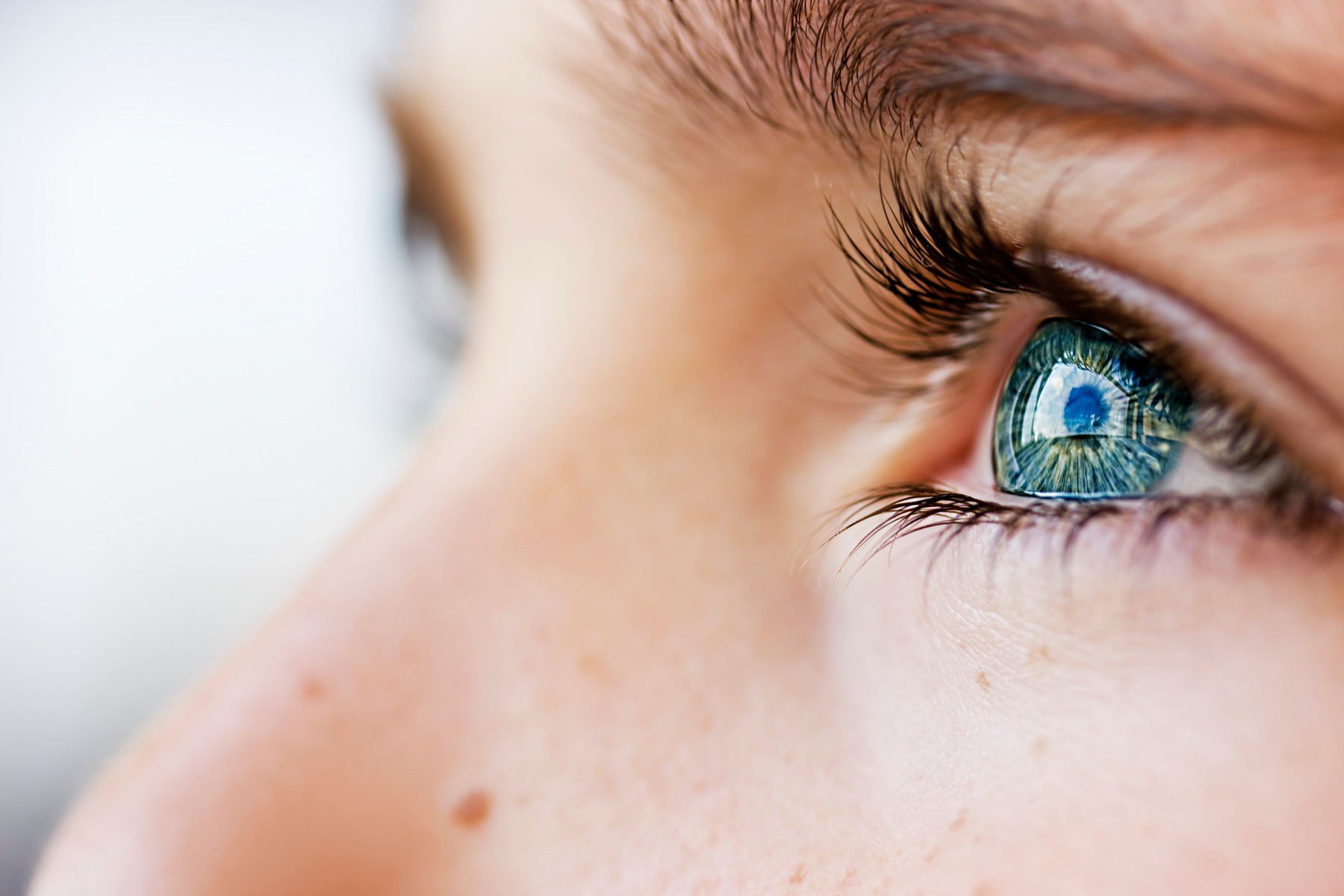
What is LASIK & PRK?
LASIK and PRK are laser procedures that reshape the cornea so the eye focuses on its own, reducing or ending a dependence on glasses and contacts. LASIK works under a thin hinged flap; PRK works on the surface with no flap. The laser reshaping is essentially identical; the route to the tissue differs.
You already know what you want. Clear vision without a frame on your face or a lens on your eye. What you may not know is that "laser eye surgery" is not one procedure but two close relatives, and the difference between them often decides who gets which.
Both LASIK and PRK correct vision by reshaping the cornea, the clear, curved front window of the eye that does most of its focusing. An excimer laser removes microscopic amounts of corneal tissue to change its curvature, so light lands where it should: on the retina, in focus. Nearsightedness, farsightedness, and astigmatism all trace back to a cornea-and-eye combination that bends light slightly off the mark. Reshaping the cornea is how the laser brings it back.
The part worth sitting with is this. The surgery itself is well understood and highly refined; the thing that actually determines your outcome is whether your eyes were suited to it in the first place. Nearsightedness is the most common reason people seek correction, and it is becoming more common. In the United States, myopia prevalence increased 66 percent between 1971-1972 and 1999-2004, rising from roughly a quarter of the population. Most of those eyes are good candidates for laser correction. Some are not. The rest of this page is about the line between the two.
LASIK or PRK: what actually separates them
LASIK and PRK reach the same target by slightly different routes. The laser reshaping is essentially identical; what differs is how the surgeon gets to the tissue underneath.
- LASIK (Laser-Assisted In Situ Keratomileusis). A thin, hinged flap is created in the surface of the cornea and folded back. The excimer laser reshapes the tissue beneath, and the flap is laid back into place, where it seals without stitches. Because the surface heals over a protected bed, vision tends to clear quickly and comfort returns fast.
- PRK (Photorefractive Keratectomy). No flap. The thin outer layer of the cornea, the epithelium, is gently removed; the same laser reshapes the surface directly; and that outer layer regrows over the following days. The end correction is comparable to LASIK. The road there is longer and, in the first several days, less comfortable.
One thing neither procedure does: touch the lens inside the eye. That means laser correction cannot prevent or treat a cataract later, and it does not stop presbyopia, the age-related loss of near focus that arrives in your mid-forties no matter how sharp your distance vision is. Those are different problems with different answers — we cover them on our refractive lens exchange and cataract surgery pages.
What is the difference between LASIK and PRK?
LASIK creates a thin, hinged flap in the cornea, reshapes the tissue beneath, and lays the flap back, so vision clears quickly. PRK removes the cornea's outer layer instead, reshapes the surface directly, and lets that layer regrow. The end correction is comparable; PRK's recovery is longer and less comfortable early on.
You may be a good candidate if…
No webpage can clear you for surgery; that takes a dilated exam and corneal measurements done in person. But candidacy for LASIK and PRK turns on a well-defined set of factors, and you can get a realistic read on yourself before you ever book a visit. You are more likely to be a candidate if most of these describe you:
- You are at least 18. The FDA sets 18 as the minimum age for laser vision correction, and many surgeons prefer to wait into the early twenties, because a prescription that is still drifting will quietly undo the result.
- Your prescription has held steady for about a year. Roughly twelve months of an unchanged prescription is the practical signal that your eyes have settled. Correct a moving target and you are back in glasses sooner than you should be.
- You are not pregnant or nursing. Hormonal shifts during pregnancy and breastfeeding can temporarily change both your prescription and your eyes' surface, so surgery is deferred until things return to baseline, usually a few months after.
- Your ocular surface is healthy and your eyes are free of active disease. Significant dry eye, infection, or an uncontrolled condition is addressed first. Laser correction is not performed on an eye that is already fighting something else.
- Your corneas are thick enough and regularly shaped. This is the one you cannot judge for yourself, and it is the most important. The exam includes detailed corneal mapping (topography) specifically to screen for keratoconus and other forms of corneal thinning or irregularity. Reshaping a cornea that is already structurally weak can trigger ectasia — progressive bulging and distortion that makes vision worse rather than better. Catching it is the entire reason the mapping is done, and a borderline result is a legitimate reason to steer toward PRK, or to advise against laser correction altogether.
Does laser vision correction prevent cataracts or fix reading vision?
No. Neither LASIK nor PRK touches the lens inside the eye, so laser correction cannot prevent or treat a cataract later. It also does not stop presbyopia, the age-related loss of near focus that arrives in the mid-forties regardless of how sharp your distance vision is.
The risks worth knowing before you decide
LASIK and PRK are among the most studied elective procedures in medicine, and most patients are glad they had it done. In one published series of refractive surgery patients, 91.2% reported being satisfied with their surgery. High satisfaction is not the same as no risk, though, and an elective operation on a healthy eye earns a plain accounting of what can go wrong.
- Dry eye. The most common side effect, especially after LASIK, because reshaping the cornea temporarily disrupts the nerves that signal tear production. For most patients it is mild and fades over weeks to a few months, managed with drops in the meantime. For a smaller number it lingers, which is one reason a pre-existing dry-eye problem is taken seriously before surgery rather than after.
- Glare, halos, and starbursts at night. Many patients notice rings or streaks around headlights and bright lights in the first weeks, particularly in dim conditions. These usually settle as the eye heals and the brain adapts. Occasionally some night-vision change persists, which matters most for people who drive a great deal after dark.
- Under- or over-correction, and the occasional enhancement. Sometimes the eye heals to a result slightly off the target, leaving a small residual prescription. When that happens and the eye is otherwise healthy, a second "enhancement" procedure can fine-tune it. It is uncommon, but it is real, and you should walk in knowing it is a possibility, not a promise of one-and-done.
- The serious-but-rare category. Flap complications after LASIK, delayed surface healing or haze after PRK, infection, and ectasia are all uncommon when candidacy is screened carefully, which is precisely why the screening is not a formality. The corneal mapping that rules out keratoconus is the single best protection against the worst outcomes.
What recovery actually looks like
This is where the two procedures part ways most noticeably, and it is worth setting expectations honestly, because the difference is real.
After LASIK, vision often clears remarkably fast — and the procedure itself takes only minutes per eye, the laser mere seconds. Many patients see well enough to function within a day or two, with some blur, light sensitivity, and a gritty feeling the first day that eases quickly. People frequently return to desk work within a couple of days, and vision keeps sharpening and stabilizing over the following weeks. After PRK, recovery is more gradual by design, because the outer corneal layer has to regrow. The first three to five days can be genuinely uncomfortable, usually managed with a bandage contact lens and drops, and vision is blurry while the surface heals. Many patients find their vision usable around a week in, then watch it keep improving over the following weeks to a few months as it settles to its final result. The destination is comparable to LASIK. The journey simply takes longer.For both, line up a driver for the day of surgery, expect a schedule of medicated and lubricating drops, and keep from rubbing your eyes while they heal. The ranges above are typical, not promised; your surgeon will hold yours to your own cornea and tell you specifically when you are cleared to drive, return to work, and resume exercise.
The option we don't offer, and think you should know about
If your cornea is too thin for LASIK, or your prescription too strong, the honest answer is not always "PRK instead." Sometimes it is a different category of procedure altogether: the implantable collamer lens, sold as the EVO ICL.
An ICL is not laser correction. Nothing is reshaped and no tissue is removed. A soft, flexible lens is placed inside the eye, in front of your natural lens, through a small incision. Your own lens stays where it is — which is what separates it from refractive lens exchange, where the natural lens is taken out. Because the cornea is left alone, an ICL does not thin it, and it does not sever the corneal nerves that laser correction does. That matters for two groups in particular: people whose corneas are too thin to give a laser enough tissue to work with, and people who already have significant dry eye or an autoimmune condition that puts them at higher risk of it. It is also removable, which very little in refractive surgery is.
Dr. Tuli does not currently offer the EVO ICL. It is on this page anyway, because she asked for it to be. If it turns out to be the right operation for your eyes, she would rather you hear that at your exam — and be sent to a surgeon who performs it — than have it quietly left off the menu because we don't happen to sell it. A practice that only tells you about the procedures it offers is not giving you a choice. It is giving you a catalogue.The judgment behind the laser
The excimer laser is a remarkable instrument, but it does only what it is told. The outcome you get depends far more on the decisions made before it ever fires: which procedure suits your cornea, whether your eyes are ready, and whether you should have laser correction at all. Those are surgeon's judgments, and they are where training shows.
Dr. Suhas Tuli is a board-certified, comprehensive ophthalmologist whose cornea-and-refractive fellowship training, at Johns Hopkins and USC, sits squarely on the part of the eye these procedures reshape. A member of the American Academy of Ophthalmology and the American Society of Cataract and Refractive Surgery, she has been recognized as a Castle Connolly Top Doctor. She is as ready to tell you that LASIK is not your best move as she is to perform it, because she trained at the level where a cornea's limits are read, not guessed.
LASIK & PRK: Questions Patients Ask
Neither is better in the abstract; they suit different eyes. LASIK offers faster, more comfortable recovery and is excellent for eyes with adequate corneal thickness and a normal surface. PRK is the wiser choice when the cornea is thinner, the surface has certain issues, or your life carries a genuine risk of a blow to the eye. The exam settles which one your cornea can safely tolerate.
The corneal map, or topography, screens for keratoconus and other thinning or irregularity that would make reshaping unsafe. Operating on a structurally weak cornea risks ectasia, a progressive bulging that worsens vision over time. This screening is the most important safety step in the whole evaluation, and a borderline result genuinely changes the recommendation.
Yes. Correcting farsightedness with a laser is less predictable than correcting nearsightedness, more likely to regress somewhat over time, and effective only up to a practical limit. Plenty of farsighted patients are still good candidates; those beyond the comfortable range are usually better served by a lens-based procedure, which is part of what the consultation sorts out.
Surgery is deferred until your hormones and your prescription return to baseline, typically a few months after you finish nursing. The reasoning is practical: pregnancy can shift your prescription temporarily, and correcting a moving target leaves you with a result that drifts.
Not automatically, but it warrants caution. Conditions that impair wound healing, lupus and rheumatoid arthritis among them, matter because the cornea has to heal predictably for the correction to last. Autoimmune conditions also carry a higher risk of dry eye after laser surgery, which weighs in the decision. Whether laser surgery is wise depends on your specific condition, how well it is controlled, and what the exam finds, which is exactly the kind of judgment the consultation exists to make.
The reshaping itself is permanent. What can change is the eye around it: a prescription that was still settling, the natural aging of the lens, or some regression with farsighted corrections. That is why a stable prescription beforehand matters, and why a small enhancement is occasionally needed afterward.
It can dramatically reduce or eliminate your need for distance glasses, and many patients stop wearing them altogether. It is not a lifetime guarantee. Your eyes still age, and presbyopia — the loss of near focus in your mid-forties — arrives on its own schedule, which is why even people with sharp distance vision often pick up reading glasses later.
Numbing drops mean little to no pain during the surgery itself. Afterward, LASIK typically causes mild irritation for about a day; PRK is more uncomfortable for the first several days while the surface regrows, eased with a bandage contact lens and medication.
See where your eyes stand
The honest answer to "should I get LASIK or PRK" is that it depends entirely on measurements only an exam produces: your corneas' thickness and shape, your eye's surface, and how stable your prescription has truly been. A consultation replaces the guessing with measurement: a thorough exam, corneal mapping, and a frank conversation about which procedure fits you, whether you are ready for it, and what your particular recovery would look like.
To arrange that evaluation at Tuli Eye Care Center in Burbank, call (818) 845-2015 or request a consultation through our contact form. Come with the questions you would ask if your eyesight depended on the answers. It does.